

On 15 July, The Wailers arrive in Sofia with their anniversary tour, 50 Years of Positive Vibrations, marking half a century since the release of Rastaman Vibration. Led by Aston Barrett Jr., the band returns to the record that established reggae on the global stage without separating the music from resistance, spirituality and the right to be heard.
The phrase “positive vibes” has long since become an automatic formula – repeated so often that it has almost lost its meaning. On the 1976 album Rastaman Vibration, however, positive vibration does not mean looking away from what is difficult. “Positive Vibration” stands alongside “War”, “Crazy Baldhead” and “Rat Race” – songs about racial hierarchy, education as a means of subjugation, historical violence, power, betrayal and survival. Here, hope does not offer an escape from reality. It gives you the strength to face it without losing your voice or dignity.
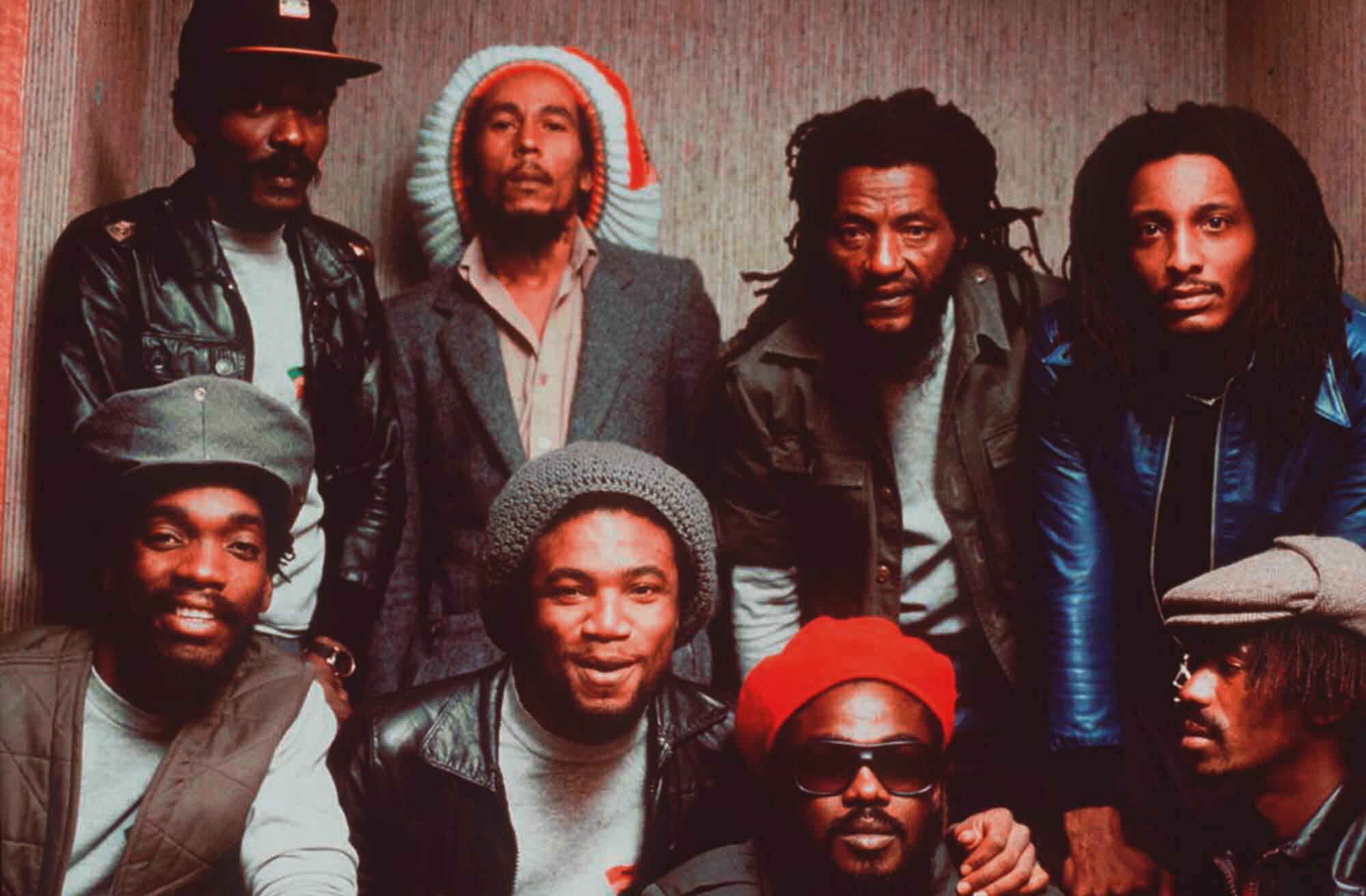 photo: Bob Marley & The Wailers
The album that refuses to choose between music and social consciousness
When Rastaman Vibration was released in 1976, Bob Marley was already known beyond Jamaica. Yet it was this album that became his first to reach the Top 10 of the US Billboard 200, climbing to number eight. The commercial breakthrough did not come through softening the message, but with one of the most politically and spiritually charged albums of his career.
That matters today, when Marley’s image is often reduced to a smile, three colours and a handful of instantly recognisable choruses. Behind the universal symbol of tranquillity stands an artist who spoke about colonialism, poverty, racism, political hypocrisy and faith – and did so through music that never allowed seriousness to become a burden.
The clearest example is “War”. The lyrics draw on a speech delivered by Ethiopian Emperor Haile Selassie before the United Nations General Assembly in 1963. Marley places its political rhetoric over a measured, almost hypnotic rhythm in which the voice never competes with the music.
Until the philosophy which hold one race superior and another inferior is finally and permanently discredited and abandoned, everywhere is war…
This tension runs throughout Rastaman Vibration: music that makes the body move but refuses to let the mind stand still. That is precisely why the album still sounds relevant half a century later. Not because the world has remained the same, but because some of its questions are still waiting for answers.
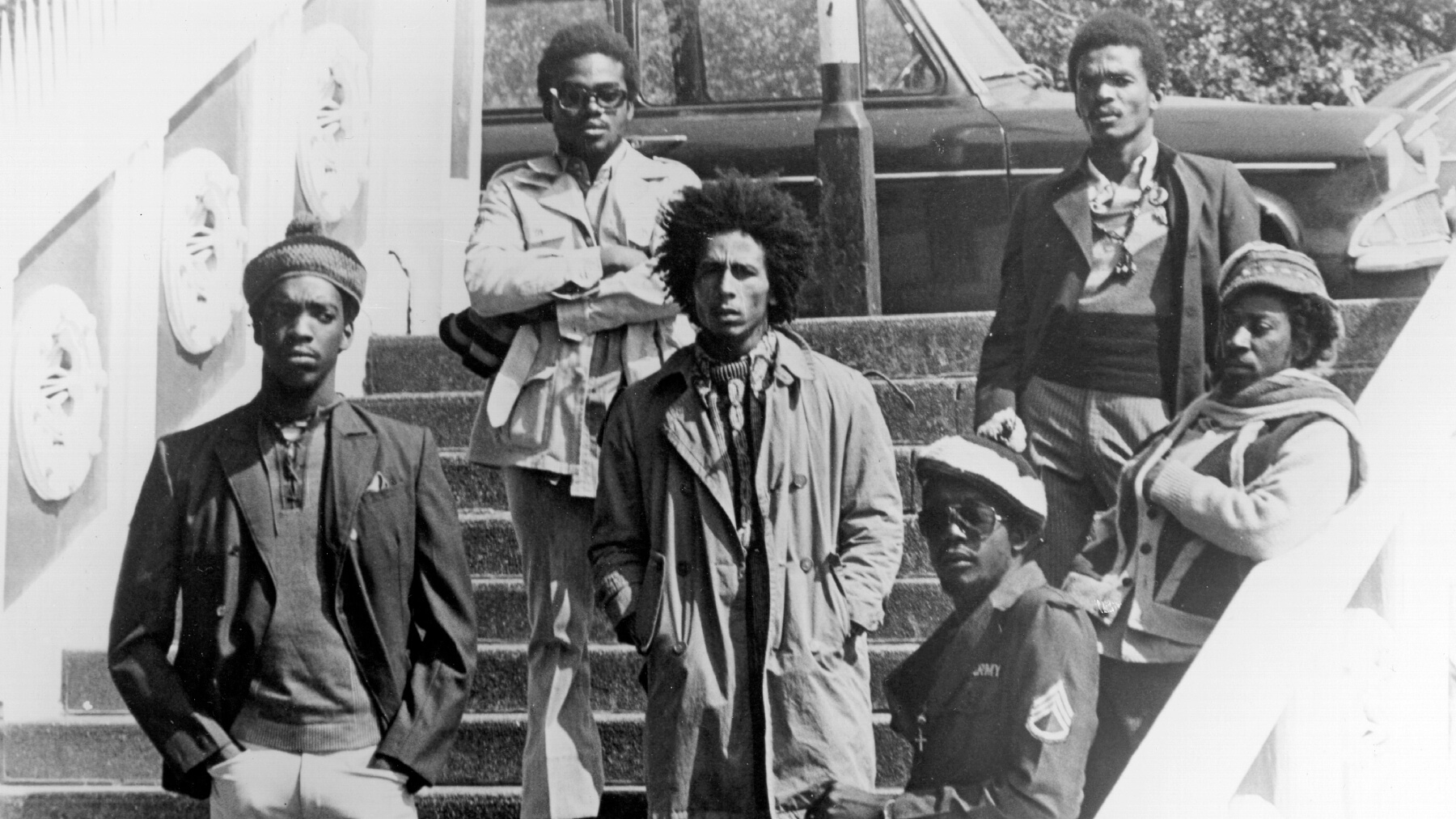 photo: Bob Marley & The Wailers
Who are The Wailers in 2026?
With a name like The Wailers, the question of continuity is unavoidable. Following Marley’s death in 1981, the musicians from his band continued to perform under The Wailers name, led for many years by bassist Aston “Familyman” Barrett. Together with his brother, drummer Carlton “Carly” Barrett, Familyman built the rhythmic foundation of the classic Bob Marley & The Wailers recordings – that distinctive balance of depth, space and movement that cannot easily be reduced to notes alone. Familyman died in 2024 at the age of 77.
Since 2016, the band has been led by his son, Aston Barrett Jr. His connection to the music goes far beyond an inherited surname. He grew up among the people who created this sound, learned bass from his father, played drums, keyboards and guitar, worked with Julian Marley and Lauryn Hill, and gradually moved through different roles within The Wailers – from musician on stage to bandleader and musical director.
In 2024, Barrett Jr. portrayed his own father in the film Bob Marley: One Love. It is an unusual inversion of family memory – the son steps into the role of the man who taught him music, within a story that has largely shaped his own life.
 photo: The Wailers today
The continuity within the current line-up does not run through bloodlines alone. Bassist Owen “Dreadie” Reid was a student of Familyman and performed with The Wailers as early as the late 1980s. Drummer Carl “Carlalou1Drop” Benjamin developed his style under the strong influence of Carlton Barrett and has worked over the years with U-Roy, Lee “Scratch” Perry, Big Youth and Mutabaruka. Guitarist and vocalist Wendel “Junior Jazz” Ferraro brings experience from stages and recordings with Gregory Isaacs, Jimmy Cliff, Mary J. Blige, Inner Circle and Third World. It is a musical lineage passed down through listening, collaboration and years of playing, rather than through archive recordings alone.
At the centre of the stage is Mitchell Brunings – a Suriname-born, Netherlands-raised vocalist whose musical language has been shaped by reggae, soul, rhythm and blues, Motown and Caribbean styles. A wider audience discovered him through The Voice of Holland, and in 2015 he played the leading role in the production Marley at Baltimore Center Stage. He rises to the challenge of finding his own voice in songs whose original interpretations have become part of our collective musical memory.
Legacy is not enough
The Wailers could easily have remained a touring machine for classic songs. Instead, the band continues to record new music. One World and Evolution received Grammy nominations for Best Reggae Album in 2021 and 2025 respectively.
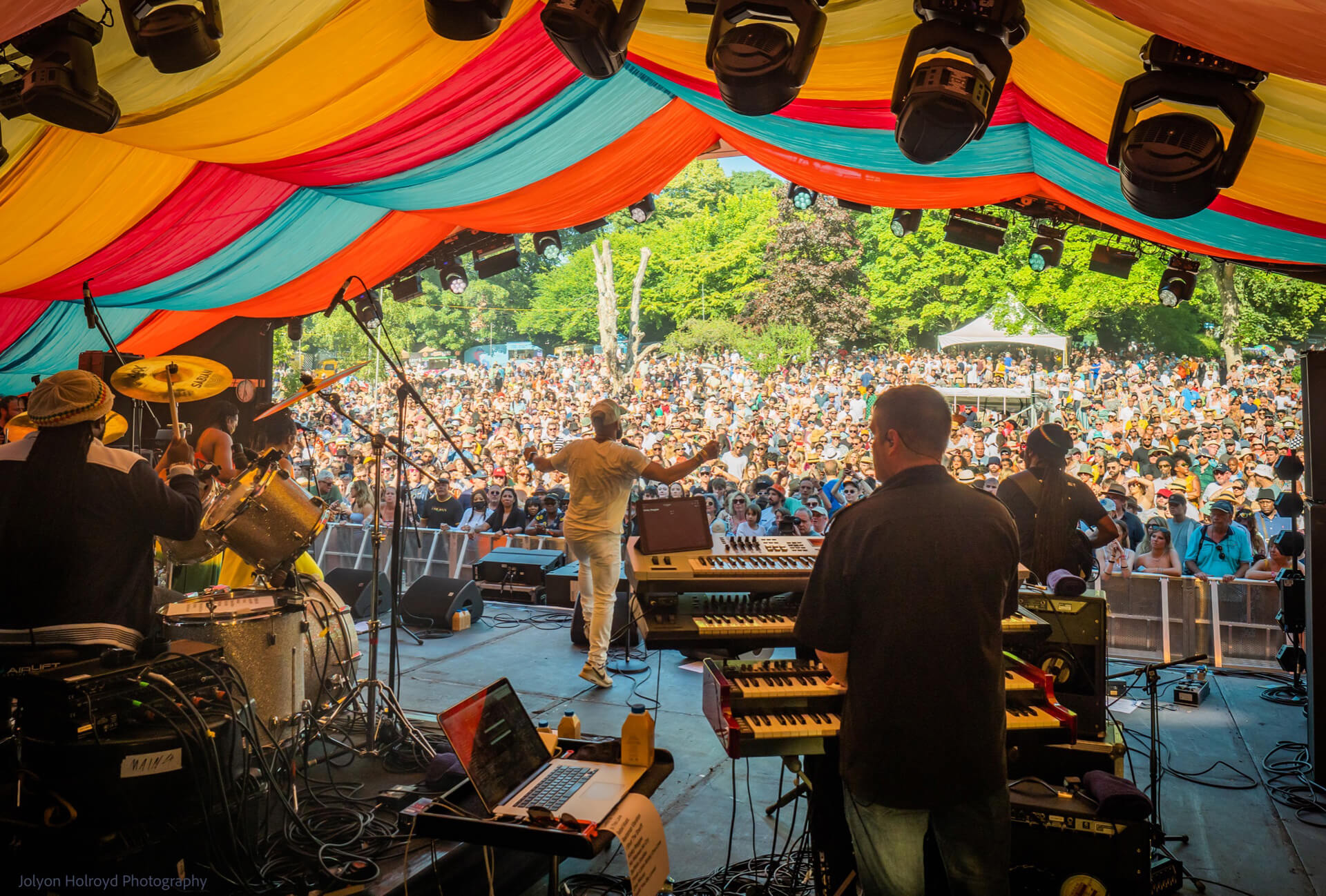 photo: The Wailers performing live during their One World tour in 2022
Released in 2024, Evolution was produced by Emilio Estefan Jr. and features appearances by Marcia Griffiths, Mykal Rose, Gramps Morgan and Emily Estefan. The album does not attempt to recreate 1976 in sterile detail. Instead, it opens roots reggae towards a broader Caribbean and Latin American sound world. That may not satisfy every purist, but it raises a far more interesting question: how does an inherited sound remain alive without becoming a museum piece reproduced endlessly?
From Kingston to “roasted peppers”
Before The Wailers take the stage, one of Bulgaria’s most beloved bands, Taraleshta, will open the evening. Formed in 2019 by Mitko Taralezhkov, the group also includes Alexander Mihaylov on kaval and saxophone, Ilko Gradev on accordion, Dani Ognyanov on bass, Neven Kiderov on percussion and Asen Haydutov on drums. Following three studio albums, the musicians recently revealed another side of their work with the project Taraleshta na Morfin (Taraleshta on Morphine), in which songs by the American band Morphine are given Bulgarian lyrics and a new life on stage.
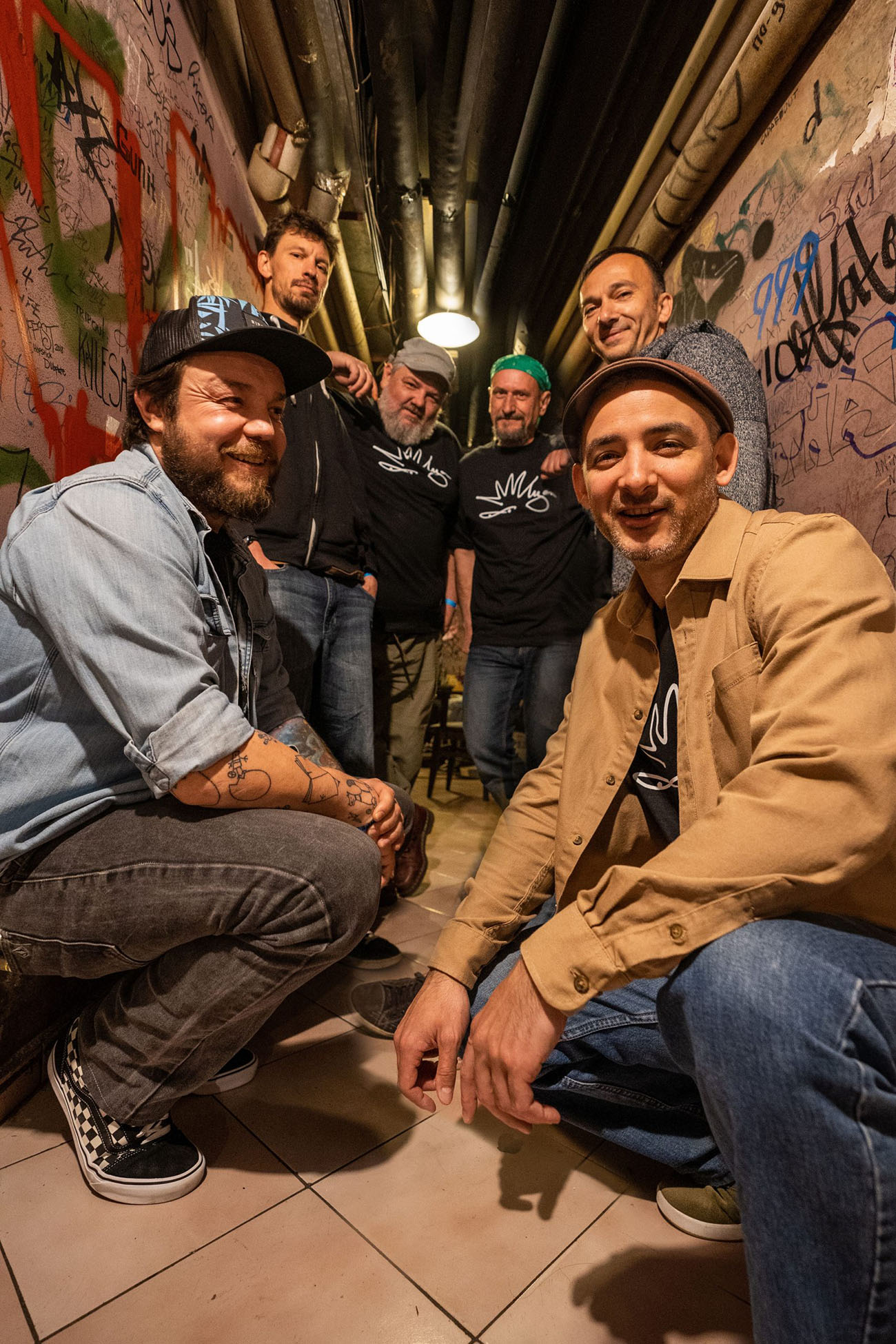 photo: Taraleshta band
Half a century later, positive vibration still carries meaning. Hope not as a filter laid over reality, but as a way to remain standing while facing it.
Tickets for The Wailers and Taraleshta at Sofia Live Club on 15 July (starting at 7:00 p.m.), are available through Ticket Station. Follow the latest event updates here.
text: Sofia Hussein for Dinya
photos: courtesy of the artists


